📊 Quick Summary: WORKPRO 6″ Locking C-Clamp Review: Why These C Clamps
| Content Type | Hand Tested Review |
| Last Updated | Sunday, June 7, 2026 |
| Fact-Checked By | Smart AI Gears Team |
| Quick Summary | A hands-on review of the WORKPRO 6" locking c-clamp, highlighting how its swivel pads outperform fixed-jaw models on uneven and delicate surfaces. |
| Overall Rating | 4.9 |
| Best For | Metalworkers, woodworkers, mechanics, and electricians working with uneven or delicate materials. |
| What’s Great | Swivel pads adapt to angled surfaces (±15°), prevent surface damage to soft materials, and feature a wide jaw to bypass obstacles. |
| What’s Not | The clamp is somewhat bulky, and the swivel pads can obstruct very close welding work. |
| Buy If | You frequently need to securely clamp angled, bumpy, or soft materials without denting or scratching them. |
| Avoid If | You only work on perfectly flat, hard stock or need maximum clearance for a welding torch. |
| Product Links |
View More Review Details
| Tested / Researched By | Tyler Rourke — Contributor |
| Testing / Research Date | Unknown |
| How We Evaluated | The tool was evaluated by clamping steel pieces set at 10° and 20° angles and testing on 16-gauge sheet metal to compare grip and surface impact against fixed-jaw models. |
| Main Limitation | The swivel pad design is bulkier near the clamp body, making it less ideal for tight spaces or perfectly flat alignments where standard fixed jaws excel. |
| Update Note | Standard fixed-jaw locking c-clamps. |
Transparency & Editorial Policy
- Affiliate Disclosure: As an Amazon Associate, we earn from qualifying purchases at no extra cost to you. Prices and availability can change, so please verify the latest details on Amazon or the listed retailer before buying.
- Hand-Tested Review: This review is based on direct hands-on product testing, practical use checks, and editorial evaluation. We only use hands-on language when the product was actually tested by our team or a trusted testing partner.
- AI & Media Usage: AI tools may be used for formatting, clarity, grammar, editing support, or image presentation. AI-generated or edited visuals should be treated as illustrations unless clearly labeled as original hands-on testing photos. Product claims, testing notes, research findings, and final recommendations are reviewed and controlled by our editorial process.
Small C clamps often come with a few common issues. Either they don’t hold properly and feel loose or slip during use, or they sometimes damage the surface of the material you’re working on. I’ve struggled with this problem on plenty of projects. Fixed-jaw models tend to either slip or scratch delicate surfaces right when secure pressure is most needed. The WORKPRO 6″ locking c clamp uses a swivel pad design to fix what most traditional vise-grip locking c clamps fail to handle well.
These reliable locking clamp tools meet tough ASME standards B107.24 and B107.36. They promise strong performance while keeping your materials safe from harm. Swivel pads are less likely to harm delicate or soft materials than fixed ones. I’ll test these 6-inch c clamps myself to show if they offer the versatility they claim and if swivel pads perform better than fixed designs.

What Is the WORKPRO 6″ Locking C-Clamp and Who Should Get It
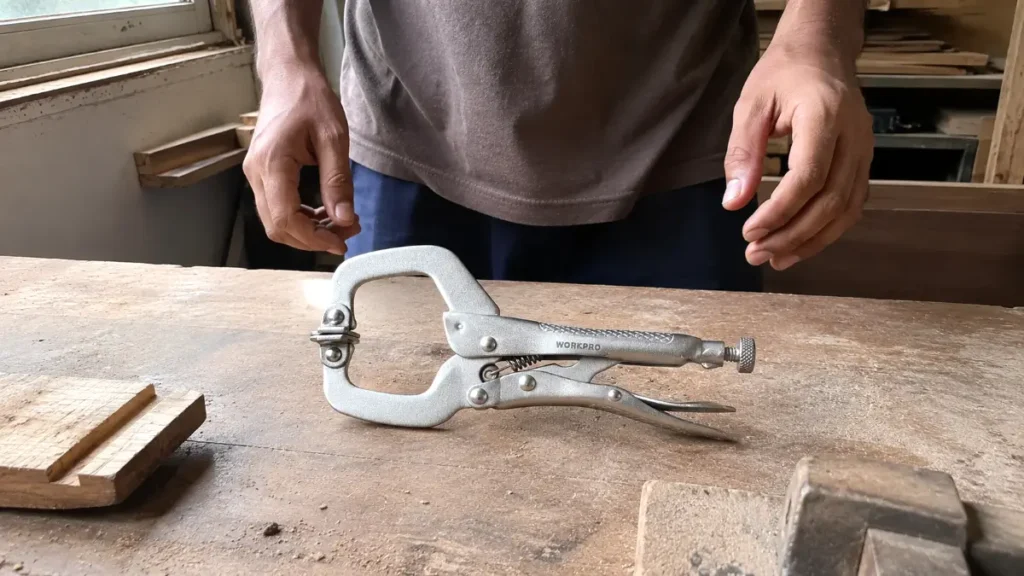
The WORKPRO 6″ locking c-clamp (model WP231063) uses chrome-vanadium steel construction in a small 160mm frame. The CR-V alloy gets heat-treated to boost its strength and stop it from bending under pressure.
Unlike traditional vise-grip locking clamps, this one comes with wide C-shaped jaws that can reach past obstacles. Its large opening makes it easy to clamp around edges and uneven surfaces where regular clamps can’t reach. Swivel-mounted pads adjust to match uneven surfaces, but standard tips are better suited for smooth flat materials.
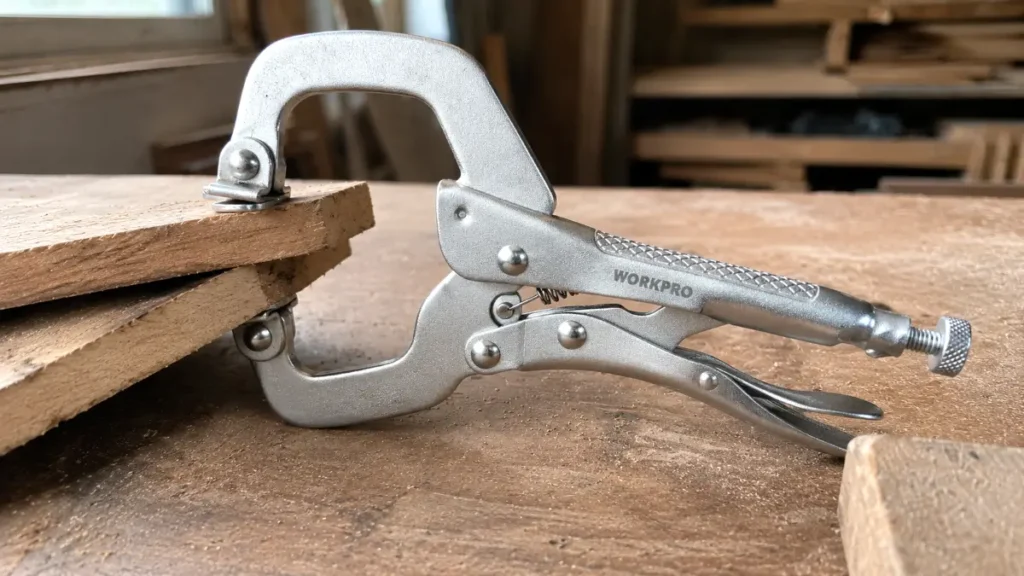
You can use the adjustment screw to set the jaw opening before securing it by squeezing the handle. It also has a hex socket on the screw to provide more force if needed. To release just give the trigger a light push, which makes it quicker to repeat clamping compared to opening and closing standard c-clamps.
Metalworkers gain the most from these small C clamps. While working with metal, you often need to secure pieces in place before starting to weld. People who work with wood use them a lot to hold parts together while applying glue on furniture with uneven edges. Blacksmiths and auto body workers also use them to steady materials with bumpy surfaces.
The broad jaws spread out the pressure , which helps keep the materials steady when welding or fastening.
How I Tested the WORKPRO 6″ Locking C-Clamp
To see if the swivel pad design truly beats traditional fixed-jaw models, I put this clamp through a series of practical stress tests on my own workbench:
- The Angle Grip Test: I clamped scrap steel pieces set at both 10° and 20° angles to observe if the ±15° swivel pads could maintain full, flat contact without slipping.
- Surface Damage Evaluation: I applied maximum clamping pressure on delicate materials, including soft pine wood and 16-gauge sheet metal, specifically looking for dents, scratches, or bite marks compared to standard fixed-jaw clamps.
- Mechanism & Durability Check: I repeatedly engaged the adjustment screw and the quick-release trigger during assembly tasks to test for jamming, ease of one-handed use, and the overall stability of the CR-V steel frame under load.
Testing Performance: Swivel Pads Compared to Fixed-Jaw Designs
When running repeated clamping tests, you can notice the benefits of the swivel mechanism. The pad tilts ±15° letting it rest flat against slanted surfaces. This creates even contact that fixed-jaw models just can’t match. Regular clamps, on the other hand, put all the pressure on one point if the workpiece isn’t level.
I tested both designs by clamping steel pieces set at 10° and 20°. The swivel pads kept solid full contact on the material throughout. Fixed jaws however bit into the edge where they touched, which can damage softer materials.
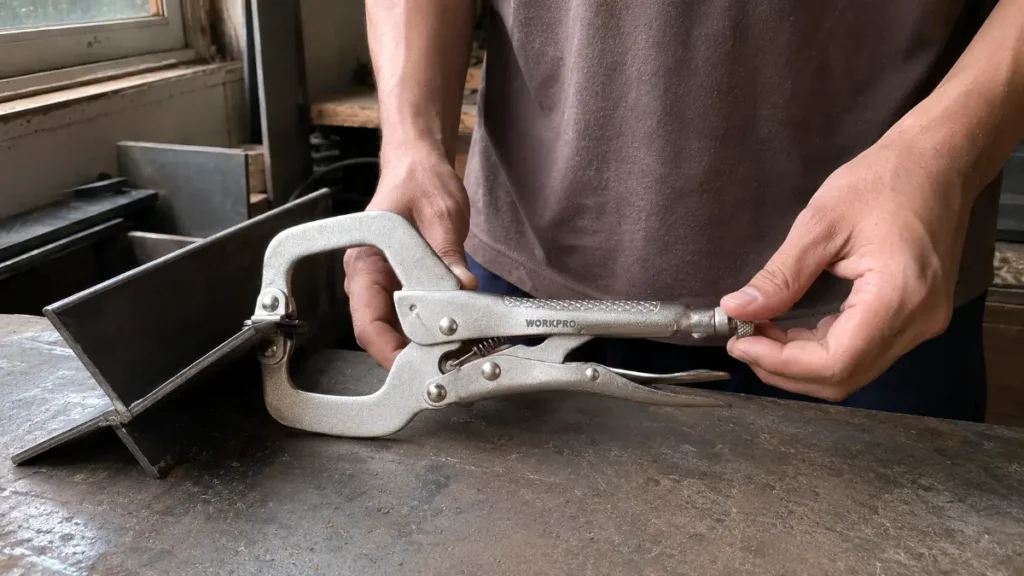
Without a rotating pad, the screw tip presses down harder on a single spot. That’s why welders tend to favor swivel pads for butt joints where slight misalignments often happen during work.
Swivel pads spread force across surfaces creating more contact than fixed points. This design grips gentler on soft materials like wood or aluminum. For example, clamping 16-gauge sheet metal with fixed jaws left noticeable dents, whereas swivel pads made smooth and clean contact.
On the other hand fixed-jaw clamps have a sleeker design. Near the clamp body, swivel pads can get in the way of a welding torch making them less ideal for close welding tasks. On hard flat surfaces with perfect alignment regular fixed jaws provide steady and effective pressure. Deciding between the types depends on whether you’re working with uneven surfaces or flat materials.
Situations Where WORKPRO 6-Inch C Clamps Shine
Woodworkers use these small C clamps to glue boards together when they need tight joints for cabinets, frames, or tabletops. I rely on them while putting together jigs or holding router guides steady on my workbench, which helps me stay precise during sanding or routing. Their soft grip works well for picture frames and trim since the swivel pads on the C clamps spread out the pressure and protect finished surfaces from damage.
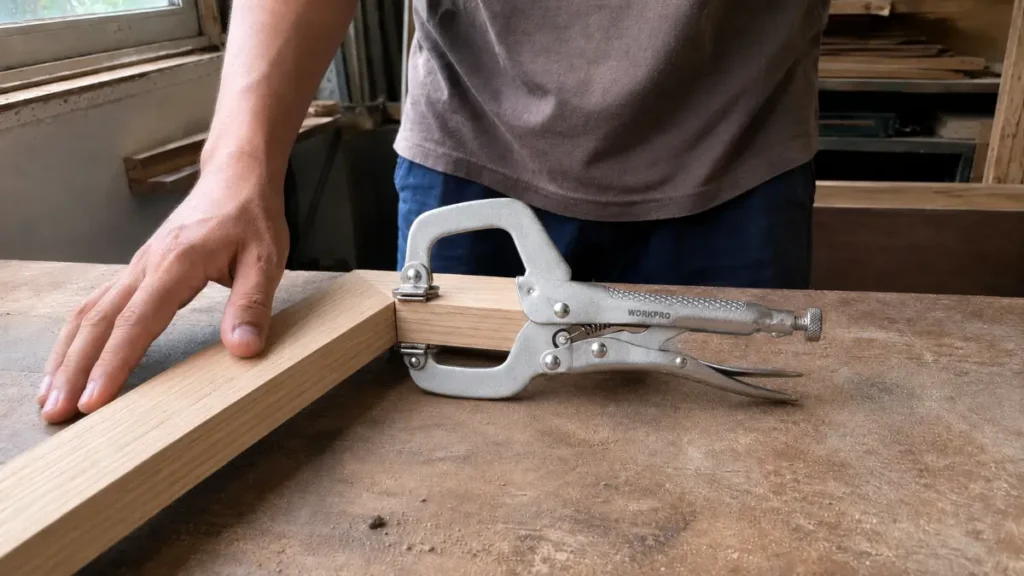
Metal fabricators also use C clamps to hold sheets, pipes, or bars in place during welding, grinding, or drilling. I often align metal pieces on my welding table to stop them from warping under heat. With an adjustable jaw, this locking C clamp becomes a versatile tool to handle parts of various thicknesses especially when bolts need to be installed during assembly.
Car repairs offer another great example of their usefulness. Mechanics push in brake caliper pistons when changing brake pads. Body shop workers keep panels and trims steady while adhesives set. This vise-grip locking C-clamp design allows precise alignment without needing to hold parts by hand .
Construction workers attach pipe sections and conduit to temporary frames. Electricians use them to secure meters to benches during tests for continuity. The 6-inch opening of the C-clamps fits most regular pipe sizes and has enough reach to handle edge tasks. , these locking clamps are handy for setting up alignment fixtures on-site in places without permanent mounts.
Result
The WORKPRO 6″ locking c-clamp is a solid pick to handle uneven surfaces or delicate materials. Its swivel pads provide better grip and protect surfaces in ways most fixed-jaw models can’t match. Welders and woodworkers may appreciate how it tackles common clamping hassles. The clamp is a bit on the bulky side, but that’s a small downside. Fixed-jaw clamps are still the go-to for precise flat-stock tasks, but these versatile c-clamps work well across different trades.
FAQs
Q 1: What is the main advantage of using a swivel pad C-clamp? A: Unlike fixed-jaw models, swivel pads tilt (up to ±15°) to match angled or uneven surfaces. This ensures full contact and prevents the clamp from denting or scratching delicate materials like pine wood or aluminum.
Q 2: Can the WORKPRO 6″ locking C-clamp be used for welding? A: Yes, it is excellent for securing metal sheets and pipes. However, because the swivel pads are slightly bulkier than standard tips, they might obstruct the torch during very tight, close-quarter welding tasks.
Q 3: Is the WORKPRO 6-inch clamp suitable for woodworking? A: Absolutely. The swivel pads distribute clamping force evenly, which protects finished wood surfaces and picture frames from the deep bite marks often left by standard vise-grip clamps.