📊 Quick Summary: DJI Mini 2 : Review for Everyone
| Content Type | Review Without Hand Testing |
| Last Updated | Tuesday, June 9, 2026 |
| Fact-Checked By | Azlan – Smart AI Gears Editorial Team |
| Quick Summary | The DJI Mini 2 is still a strong beginner-friendly drone for daylight 4K video, travel shots, and casual flying, but buyers should watch for model-listing confusion with Mini 2 SE and DJI Mini 4K. |
| Overall Rating | 4.5 |
| Best For | Beginners, travelers, and casual creators who want a lightweight drone with 4K video and simple controls. |
| What’s Great | Compact sub-249g design, good daylight 4K video, stable gimbal, beginner-friendly controls, and useful automated shot modes. |
| What’s Not | No obstacle avoidance, no built-in subject tracking, average low-light video, and battery/range performance depends heavily on conditions. |
| Buy If | You want a portable beginner drone for daylight aerial footage and do not need advanced tracking or safety sensors. |
| Avoid If | You need obstacle avoidance, stronger low-light video, subject tracking, or a newer drone with more advanced creator features. |
| Product Links | |
| Available At | Amazon, DJI official store, and major electronics retailers, depending on current availability. |
View More Review Details
| Tested / Researched By | Azlan – Smart AI Gears Editorial Team |
| Testing / Research Date | Friday, January 31, 2025 |
| How We Evaluated | This review is based on DJI Mini 2 specifications, DJI documentation, product listing details, owner feedback, video demonstrations, common beginner use cases, and comparison with similar beginner drones. |
| Main Limitation | We did not personally flight-test this drone. Real battery life, range, camera quality, and wind performance can vary depending on location, weather, firmware, battery health, pilot skill, and local flight rules. |
| Best Alternative | DJI Mini 3 |
| Update Note | Updated the article to clarify that this is a research-based review, removed hands-on testing language, improved safety notes, corrected model-availability wording, and made buying guidance clearer. |
Transparency & Editorial Policy
- Affiliate Disclosure: As an Amazon Associate, we earn from qualifying purchases at no extra cost to you. Prices and availability can change, so please verify the latest details on Amazon or the listed retailer before buying.
- Review Without Hand Testing: We did not personally hands-on test this product. This review is based on product specifications, verified buyer feedback, expert sources, video demonstrations, and common user problems to help readers make a more informed decision.
- AI & Media Usage: AI tools may be used for formatting, clarity, grammar, editing support, or image presentation. AI-generated or edited visuals should be treated as illustrations unless clearly labeled as original hands-on testing photos. Product claims, testing notes, research findings, and final recommendations are reviewed and controlled by our editorial process.
Is the DJI Mini 2 Right for You?
The DJI Mini 2 still gets attention from beginner drone buyers because it is small, lightweight, easy to carry, and capable of recording sharp 4K video. But before buying one today, it is important to understand what it does well, where it falls short, and whether you are looking at the original DJI Mini 2 or a newer Mini 2 SE / DJI Mini 4K listing.
This review is based on product specifications, DJI documentation, owner feedback, product listing details, video demonstrations, and common beginner use cases. It is not a hands-on flight test. The goal is to help beginners, travelers, and casual content creators decide whether the DJI Mini 2 still makes sense.
Who the Mini 2 Is Best For
- New drone users: It is small, simple to understand, and easier to manage than many larger drones.
- Travelers: Its compact folded design makes it easier to carry in a small bag.
- Casual video creators: The 4K camera can produce strong daylight footage for social media, travel clips, and family videos.
- Budget-focused buyers: It can still be a good value if you find the right bundle at the right price.
When the Mini 2 Might Not Be the Best Fit
- Professional filmmakers: You may want a newer drone with better low-light performance, tracking, and advanced camera features.
- Obstacle-heavy areas: The Mini 2 does not have obstacle avoidance sensors, so close tree, building, or wire shots require extra care.
- Long flight sessions: Real-world battery life is usually lower than the maximum advertised claim, so extra batteries are strongly recommended.
The Bottom Line
The DJI Mini 2 is still a strong beginner-friendly drone if you want a lightweight model with 4K video and simple controls. Its biggest limits are the lack of obstacle avoidance, average low-light video, no built-in subject tracking, and real-world battery life that depends heavily on conditions.
More Reviews from Smart AI Gears
You may also like these tool and gear reviews:
- Makita 9903 Belt Sander Review
- Ryobi Random Orbital Sander Review
- Milwaukee Fuel Reciprocating Saw 2821-20 Review
- Dremel 4300 Review
- Fein MultiMaster MM 500 Review
DJI Mini 2 First Impression: Small, Light, and Beginner-Friendly
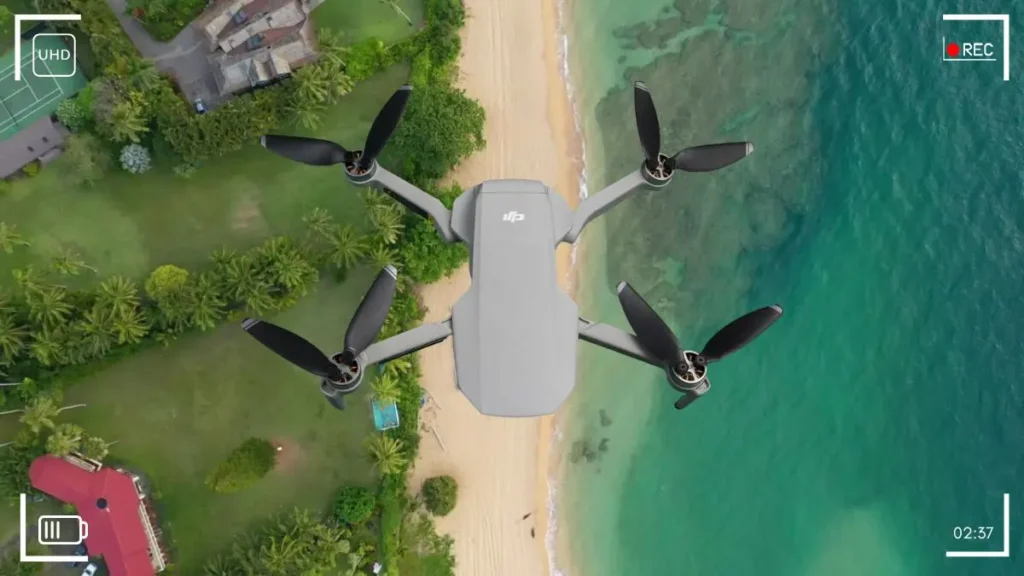
For beginners, the main appeal of the DJI Mini 2 is confidence. It is small enough to feel approachable, but it still offers serious features such as 4K video, a 3-axis gimbal, GPS-assisted flight, and Return-to-Home support.
Compared with cheaper toy-style drones, the Mini 2 is widely praised by owners for smoother controls, better video stability, and a more reliable app experience. That makes it a better first serious drone for people who want real aerial footage instead of a simple practice toy.
DJI lists strong headline specs such as sub-249g weight, 4K video, up to 31 minutes of flight time, and long-distance transmission. In real use, buyers should expect results to vary. Battery life, range, and wind stability depend on weather, interference, battery health, firmware, pilot skill, and local flight rules.
If you want a small drone for travel videos, family trips, beginner practice, and daylight aerial shots, the Mini 2 still makes sense. If you need obstacle avoidance, tracking, better low-light video, or more advanced creator tools, a newer DJI Mini model may be a better fit.
Where to Buy
The original DJI Mini 2 is sometimes unavailable or replaced by newer DJI Mini 4K or DJI Mini 2 SE listings. Before buying, check the exact model name, camera resolution, controller type, battery bundle, return policy, and whether the listing is for the original DJI Mini 2 or a related alternative.
If a product card shows DJI Mini 2 SE or DJI Mini 4K, treat it as an alternative listing, not the exact same model reviewed here.

Lightweight and portable – This DJI Mini 2 SE listing is a related alternative to the original DJI Mini 2. Check the exact model name, video resolution, controller type, battery bundle, and return policy before buying.
DJI Mini 2: Pocket-Sized Power Up Close
Pocket-Sized Power — Is It True?
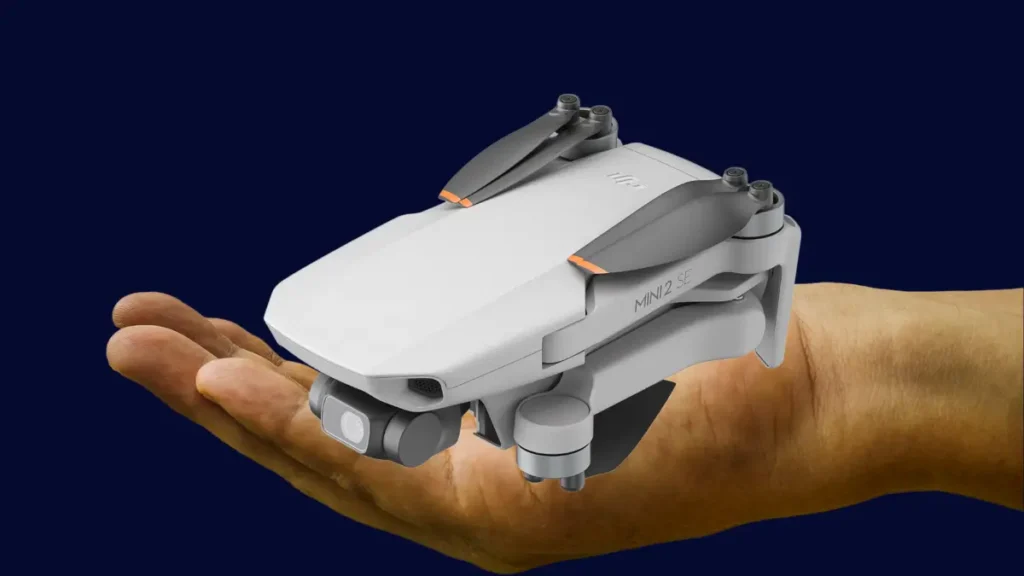
The Mini 2’s biggest advantage is portability. Folded down, it is small enough to carry in a backpack, camera bag, or travel pouch. That matters for casual users because a drone that is easy to carry is more likely to be used often.
Its lightweight design also makes it less intimidating for beginners. However, a light drone is not automatically better in every situation. Smaller drones are more affected by wind, so calm weather is still the best time to fly.
Key Technical Specifications: A Quick Glance
Flight Performance & Battery
- Flight time: DJI lists up to 31 minutes, but normal use is often lower depending on wind, speed, temperature, and battery health.
- Speed: Fast enough for casual aerial shots, but higher-speed flying will use more battery.
- Battery: Extra batteries are strongly recommended if you plan to film more than a short session.
- Range: Advertised range is based on ideal conditions. Most casual users should focus on safe, legal, line-of-sight flying rather than maximum distance.
- Wind: The Mini 2 can handle light wind, but stronger gusts can affect stability because of its small size and low weight.
Camera & Gimbal
- Video: 4K video is one of the main reasons the Mini 2 still appeals to casual creators.
- Gimbal: The 3-axis gimbal helps keep footage smooth during normal flight.
- Low light: Daylight footage is the main strength. Evening or low-light video is more limited.
Transmission & Navigation
The Mini 2 is generally considered more reliable than cheaper beginner drones, but transmission quality still depends on interference, location, controller setup, and whether the drone stays within visual line of sight.
Remote Controller
The controller is one of the reasons beginners often find DJI drones easier to use. A stable phone mount, clear app layout, and predictable controls can make the learning curve much smoother.
Real-World Expectations: Wind, Camera, Battery, and Range
Wind Resistance and Stability
Small drones and wind are not a perfect match. The Mini 2 is light, so stronger gusts can cause visible movement while hovering or filming. This does not mean it is unsafe in every breeze, but beginners should avoid flying in rough wind or near obstacles.
For smoother footage, calm weather is best. Sport Mode can help the drone fight wind more aggressively, but it can also drain the battery faster and make landing more demanding for new pilots.
Camera Quality and Video Performance
The Mini 2’s 4K camera is still impressive for a small beginner-friendly drone. In bright daylight, it can capture crisp travel clips, landscape shots, and social media videos. The 3-axis gimbal is important because it helps reduce shaky footage during normal movement.
12MP Photos
The 12MP camera is suitable for casual photos, travel memories, and online sharing. It is not meant to replace a professional camera drone, but it is strong enough for most beginner needs.
4K Video
4K video is the Mini 2’s biggest upgrade over cheaper beginner drones. Footage is best in good light, especially when the drone is flown smoothly and not pushed too hard in wind.
RAW Photo Support
RAW photo support is useful for people who want more editing control. Casual users may not need it, but it is a nice feature for anyone who likes adjusting color and exposure later.
Digital Zoom Limitations
Digital zoom should be used carefully because it can reduce image quality. For the best results, fly closer only when it is safe, legal, and clear of obstacles.
Low-Light Performance
Low-light video is only average. The Mini 2 is much better for daylight landscapes, travel footage, and bright outdoor scenes than for evening or night-style content.
ND Filters: Helpful for Bright Outdoor Video
ND filters can help in bright sunlight by reducing overexposure and making motion look smoother. They are not mandatory for beginners, but they are a useful upgrade if you care about more cinematic video.
Camera Bottom Line
The Mini 2 camera is best for daylight 4K video, travel clips, and casual aerial photos. It is not the best choice for low-light work, subject tracking, or professional filming, but it remains strong for its size and price range.
DJI Mini 2 Safety Essentials: Know Before You Fly
Return-to-Home
Return-to-Home is one of the most important features for new pilots. If the battery gets low, the signal drops, or the pilot activates RTH, the drone can return toward its recorded home point. However, RTH is only safe when it is set up properly.
The most important setting is RTH altitude. If the altitude is too low, trees, buildings, or hills can become a crash risk. Before flying, set the RTH altitude higher than the tallest nearby obstacle and check it again when flying in a new location.
Geofencing and No-Fly Zones
The DJI Fly app can warn or restrict flights in controlled or restricted airspace. Before flying, check DJI FlySafe and your local aviation rules so you do not accidentally fly near airports, prisons, military areas, or other restricted locations.
In some areas, flight authorization may be possible, but beginners should avoid restricted zones unless they clearly understand the local rules and approval process.
Obstacle Avoidance: Remember, There Are No Sensors
The DJI Mini 2 does not have obstacle avoidance sensors. It will not automatically stop before hitting a tree, wall, wire, fence, or building. That makes pilot awareness extremely important.
Beginners should start in wide open areas with plenty of space. Avoid close tree shots, tight gaps, and low passes until you are fully comfortable controlling the drone.
Main point: no obstacle avoidance means the pilot is responsible for obstacle clearance. Keep the drone in sight, fly slowly near objects, and do not rely on automation to save the drone.
DJI Mini 2 Battery Life and Range: What to Expect
Battery Life: How Long Can You Fly?
DJI lists up to 31 minutes of flight time, but that figure is based on ideal conditions. In normal use, pilots should expect less, especially in wind, cold weather, Sport Mode, or frequent direction changes.
Ideal Conditions
In calm, warm conditions with gentle flying, owners often report flight times closer to the maximum claim. However, beginners should not plan every flight around the full advertised number.
Light Wind and Normal Maneuvers
Wind, faster movement, and frequent direction changes reduce battery life. For planning purposes, it is safer to expect shorter real-world sessions than DJI’s maximum rating.
Cold Weather
Cold batteries usually deliver shorter flight time. If you fly in cold weather, keep spare batteries warm before use and land with a safe battery margin.
Battery Life Bottom Line
Extra batteries are one of the most useful accessories for the DJI Mini 2. A Fly More-style bundle or spare batteries can make the drone much more enjoyable because you are not limited to one short flying session.
Range: How Far Can It Go?
DJI’s maximum range claims are based on ideal conditions. In real life, range can be affected by trees, buildings, Wi-Fi networks, metal structures, terrain, antenna position, local rules, and whether you maintain visual line of sight.
Most casual pilots should not focus on flying as far as possible. A safer approach is to keep the drone within visual line of sight, maintain a stable signal, and follow local flight rules.
Urban Area Range Notes
Urban range can vary a lot because buildings, Wi-Fi networks, metal structures, and interference can weaken the signal. Some open city areas may perform well, but rural open fields are usually more predictable for stable transmission.
Range Takeaway
The Mini 2 offers more than enough range for most casual pilots, but safe flying matters more than maximum distance. Always keep the drone within visual line of sight and follow local rules.
DJI Mini 2 Intelligent Flight Modes
Pro-Style Shots Made Easier
The DJI Mini 2 includes automated QuickShot-style flight modes that can help beginners create more polished aerial clips. These modes are useful, but they should still be used in open areas because the drone does not have obstacle avoidance.
1. Dronie Mode
The drone flies backward and upward while keeping the subject in frame. This is useful for travel shots, outdoor scenes, and quick social media clips.
2. Rocket Mode
The drone flies straight upward while the camera points downward. It works well for revealing a wider view of a location.
3. Circle Mode
The drone circles around a selected subject, creating a smooth orbit-style shot. Use it only when the surrounding area is clear.
4. Boomerang Mode
The drone flies in an oval path around the subject and then returns. It can add movement to simple travel or outdoor videos.
Why These Modes Are Useful
- Easier cinematic shots: Beginners can create smoother-looking clips without advanced piloting skills.
- Simple controls: The app handles the flight pattern after you select the mode.
- Best in open areas: Because there are no obstacle sensors, automated modes should be used only where there is plenty of space.
- Best in calm weather: Calm wind and strong GPS make automated shots smoother.
Must-Have DJI Mini 2 Accessories
Top Accessories to Consider
The Mini 2 can work well out of the box, but a few accessories make it more practical for travel, longer sessions, and safer storage.
1. Extra Batteries
Extra batteries are the most useful upgrade. They give you more flying time and reduce the pressure to rush every shot before one battery runs out.
2. ND Filters
ND filters help in bright sunlight by controlling exposure and improving motion feel in video. They are especially useful if you want smoother, more cinematic outdoor footage.
3. Hard Case
A hard case protects the drone, controller, batteries, gimbal, and small accessories during travel. It also keeps the kit organized so you are less likely to lose parts.
Conclusion: Is the DJI Mini 2 Still Worth It?
The DJI Mini 2 is still worth considering if you want a compact beginner drone with 4K video, a stable gimbal, simple controls, and travel-friendly size. It is best for casual creators, beginners, and travelers who mainly shoot in daylight and fly in open areas.
It is not the best choice if you need obstacle avoidance, built-in subject tracking, stronger low-light performance, or more advanced creator features. For those needs, compare it with newer DJI Mini models before buying.
Pros and Cons: Quick Takeaways
Alternatives to the DJI Mini 2
If the Mini 2 does not match your needs, compare it with these alternatives before buying:
DJI Mini 2 SE
The Mini 2 SE is a more budget-focused option, but it records lower-resolution video than the original Mini 2. It can make sense for buyers who care more about price than 4K recording.
DJI Mini 3
The DJI Mini 3 is a newer upgrade with improved image features, vertical shooting support, and better battery options depending on the bundle. If obstacle sensing is a priority, compare it carefully with Mini 3 Pro or newer DJI models.
Autel EVO Nano / Nano+
The Autel EVO Nano series may appeal to buyers who want a DJI alternative and care about obstacle sensing or different camera options. Compare pricing, app support, warranty, and availability before choosing it over DJI.
Ryze Tello
The Ryze Tello is a very low-cost beginner drone for practice, kids, and indoor learning. It is not a serious replacement for the Mini 2, but it can be useful as a starter toy-style drone.
Final Recommendation
Choose the DJI Mini 2 if you want a lightweight beginner drone with 4K video and simple controls, and you are comfortable flying without obstacle avoidance. Skip it if you need tracking, better low-light video, or a newer drone with more safety sensors.