📊 Quick Summary: Power Tool Battery Standardization: One Battery Fit Every Tool
| Content Type | Research-Based Guide |
| Last Updated | Monday, July 6, 2026 |
| Fact-Checked By | Smart AI Gears Team |
| Quick Summary | This post analyzes the reality of power tool battery standardization, corporate brand lock-in, cross-brand alliances, and the safety risks of aftermarket adapters. |
| Best For | Cordless power tool buyers and DIYers looking to understand battery compatibility and ecosystem choices. |
| What’s Great | Explains corporate brand lock-in, breaks down existing trade alliances, and details technical safety risks of third-party adapters. |
| What’s Not | Industry-wide universal standardization does not exist, and cheap adapters pose risks of tool damage or fire. |
View More Review Details
| Tested / Researched By | Aadie – Smart AI Gears Content Manager |
| Testing / Research Date | Thursday, July 2, 2026 |
| How We Evaluated | Researched industry battery platforms, trade alliances, electronic regulations, and physical risks of battery management system bypasses. |
| Main Limitation | Corporate brand lock-in makes true industry-wide battery standardization highly unlikely in the near future. |
| Update Note | Added the July 2026 specialized battery partnership announcement between STIHL and Kärcher. |
Transparency & Editorial Policy
- Affiliate Disclosure: As an Amazon Associate, we earn from qualifying purchases at no extra cost to you. Prices and availability can change, so please verify the latest details on Amazon or the listed retailer before buying.
- Research-Based Guide: This guide is research-based. It uses product specifications, public information, verified user feedback, expert sources, and editorial analysis instead of claiming direct hands-on testing.
- AI & Media Usage: AI tools may be used for formatting, clarity, grammar, editing support, or image presentation. AI-generated or edited visuals should be treated as illustrations unless clearly labeled as original hands-on testing photos. Product claims, testing notes, research findings, and final recommendations are reviewed and controlled by our editorial process.
The dream of power tool battery standardization, getting one battery to run every cordless tool in your shed, no matter the brand, sounds great to anyone buying tools. But if you’ve ever tried mixing brands, you already know the actual market doesn’t work that way.
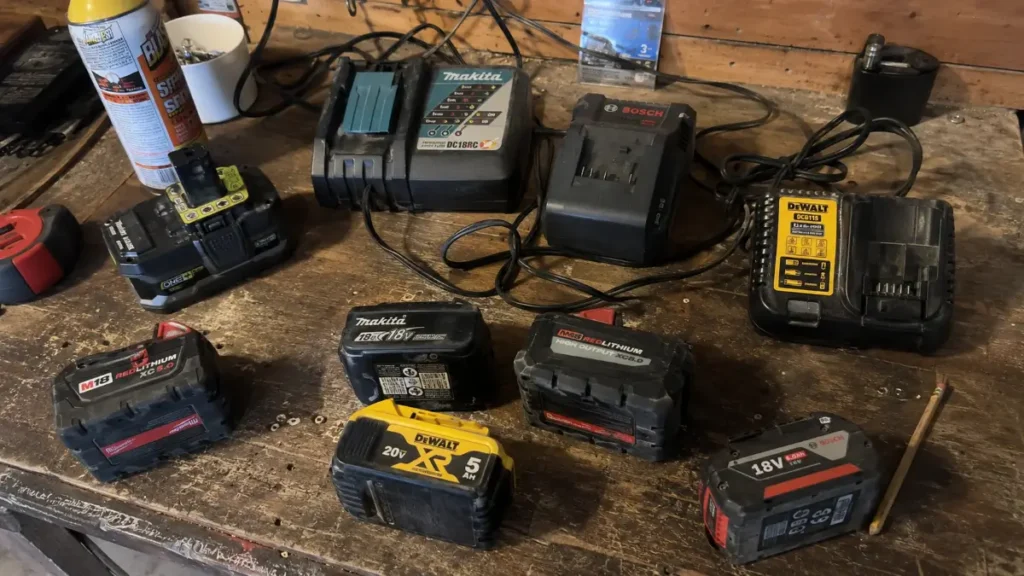
Buying a cordless drill usually means buying into a single brand’s battery lineup. If you want a different brand’s circular saw or impact driver later, you end up paying for a whole new set of batteries and chargers. This mismatch is a constant headache on job sites and in home garages.
The Best Picks

DEWALT 20V MAX Cordless Drill and Impact Driver, Power Tool Combo Kit
Buy Options

Milwaukee 48-59-1850 M18 RED LITHIUM XC 5.0 Ah Batteries (2)
Buy Options
The Corporate Obstacles to Power Tool Battery Standardization
Why don’t tool brands just use a standard battery, like the AA batteries in your TV remote? It comes down to brand lock-in and profit.
Once you buy a starter kit with a couple of expensive batteries, you are tied to that brand’s battery system. When those batteries eventually wear down, you will buy replacements from the same brand. And when you need a new tool, you will naturally buy “bare tools” (sold without a battery) to save cash. Brands keep their battery shapes, metal contacts, and computer chips proprietary so you stay in their system.
Understanding the Market: Five Approaches to Compatibility
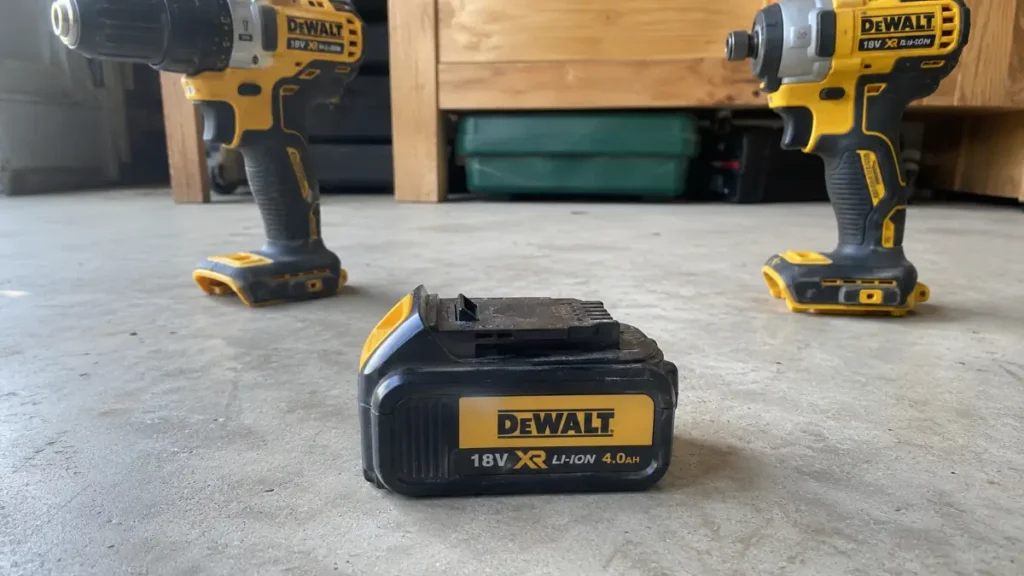
To see how things work right now, we can group the market into five basic approaches. If you are building a kit from scratch, our battery-powered tools guide can help you navigate these choices.
Cross-Brand Battery Alliances That Exist Today
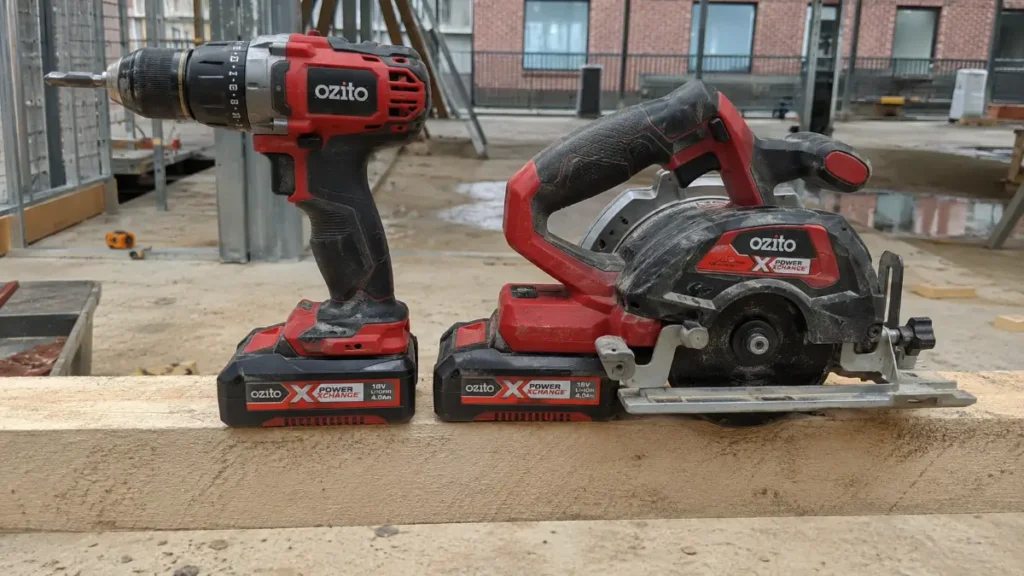
Big brands like DeWalt, Makita, and Milwaukee are staying with their own custom batteries. But a few trade alliances have popped up to give buyers some choices.
Major Battery Alliance Systems
You can find lists of partner brands on the CAS official website or the AMPShare official website. For yard work and home tasks, check out the Bosch POWER FOR ALL Alliance official website or browse compatible tools on the Worx PowerShare official website.
The 2026 Trend: The Rise of Specialized Alliances
We are seeing that future compatibility will likely come from brands working together voluntarily, not from government rules.
A recent example is the STIHL and Kärcher professional battery-system partnership announced in July 2026. According to reporting, both companies plan to use a shared professional battery system across selected equipment, showing that the market is moving toward specialized alliances rather than one universal battery for every brand.
This matters because it shows the most realistic future of power tool battery standardization: more cooperation between selected manufacturers, not a single government-forced battery pack for every cordless tool.
Are Power Tool Battery Adapters Safe to Use?
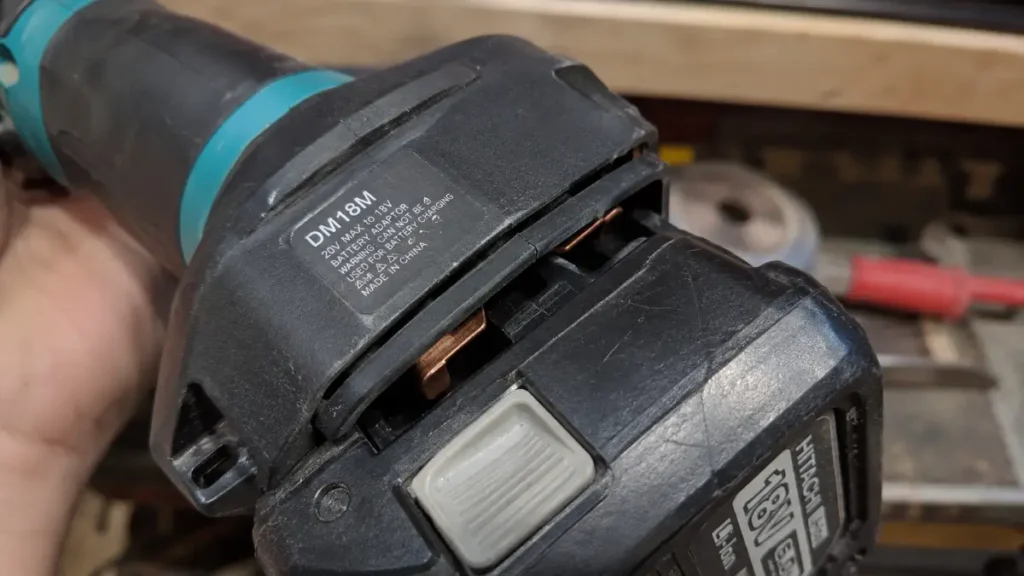
You can find cheap plastic battery adapters all over the internet. They click into your tool on one side and take a different brand’s battery on the other. They work physically, but they can cause real problems because of how lithium batteries are built.
Modern cordless tools rely on a Battery Management System (BMS). This is the small chip inside that monitors safety. In a matched set, the tool and battery talk to each other to prevent issues. Some adapters may bypass or reduce the communication the original tool-and-battery system was designed to use.
Typical problems you might run into include:
- No communication: The tool cannot read the battery’s temperature or cell balance, meaning there is no automatic shut-off if things go wrong.
- Over-draining: If lithium-ion batteries get drained too low, they can be ruined. Without communication, a tool will keep pulling power until the battery is dead and permanently damaged.
- Overheating: High-power tools like circular saws or grinders pull a lot of current. The extra resistance from an aftermarket adapter can melt the metal contacts.
- Voltage issues: Voltage issues become serious when users mix genuinely different battery classes, such as trying to adapt a much higher-voltage pack to a tool designed for a lower-voltage system. The 18V vs 20V Max label is usually a marketing difference, but 12V, 18V/20V Max, 40V, 60V, and 80V systems should never be treated as interchangeable.
- Fire risk on chargers: Trying to charge one brand’s battery on a competitor’s charger using an adapter can create a serious safety risk.
- Warranty issues: Using an aftermarket adapter can give the manufacturer a reason to deny warranty coverage, especially if the failure is linked to overheating, over-discharge, or non-approved accessories.
The Truth About EU Battery and Charger Regulations
There is a rumor that European laws are going to force tool brands to make all batteries interchangeable. That is actually a misunderstanding of two completely different sets of rules.
The EU Common Charger Rules
The EU’s Common Charger Directive forces small electronics to use USB-C.
- What it covers: Mobile phones, tablets, digital cameras, headphones, headsets, portable speakers, e-readers, keyboards, mice, portable navigation systems, and earbuds. Laptops are also included under a later deadline. You can read the details on the official EU Common Charger Rules page.
- What it does not cover: This has nothing to do with heavy-duty tools. You won’t be running an SDS rotary hammer off a phone charger.
EU Battery Regulation 2023/1542
The rule that actually affects tool batteries is the EU Battery Regulation 2023/1542.
- The real focus: This framework addresses recycling, carbon footprints, clear labeling, and user replaceability.
- Removability mandates: Many cordless tool battery packs are already designed to be removed by the user, so they generally align with the removability direction of the regulation. However, the EU Battery Regulation should not be interpreted as a mandate for one universal power tool battery shape, connector, slide-rail, or battery platform.
- The Battery Passport: While the regulation introduces a “Digital Battery Passport” for large industrial batteries, do not assume this means handheld drill batteries will display a live health dashboard to the user.
DOGE Battery Standardization Rumor: Why People Got Confused
You may have seen posts claiming DOGE is forcing tool brands to use a single battery type. That claim came from satire/April Fool’s-style content, not an official government rule. There is currently no US mandate forcing DeWalt, Makita, Milwaukee, Bosch, Ryobi, or other major brands to share one battery platform. Brands are free to build their own proprietary battery designs.
Common Mistakes Buyers Make
Avoid these common errors to save your money:
- Buying tools from too many battery platforms: A cheap tool on sale isn’t a deal if you have to buy a new charger and battery to run it.
- Thinking 18V and 20V Max are different: Under the plastic, they have the exact same five lithium-ion cells. 20V Max is just the startup voltage; 18V is the actual running voltage under load.
- Using aftermarket adapters on high-power tools: Using a basic adapter on a miter saw or grinder can melt the adapter or may damage the tool.
- Forcing batteries onto the wrong chargers: This can permanently damage the battery chemistry.
- Buying a bare tool before looking at battery prices: A cheap tool body is a trap if a spare battery costs more than the tool itself.
The Best Picks

DEWALT 20V MAX Lithium-Ion Battery 2-Pack
Buy Options
What I Would Do Before Buying a Cordless Tool System
If you are starting a new tool collection or replacing old gear, here is a practical approach to take:
- List the tools you will actually need: Write down the core tools you plan to buy over the next few years. If you need a specialized tool that only one brand makes, let that guide your brand choice. If you need a good place to start, read our cordless drill buying guide.
- Check battery prices first: Look up what a replacement 4.0Ah or 5.0Ah battery costs. Some brands price their tools low but charge a premium for spare batteries.
- Stick to one brand if you work construction: On a job site, having one charger style means less gear to pack up at the end of the day. You can also read our tool maintenance tips to get more life out of your batteries.
- Look at alliances if you use specialized trade tools: If you need plumbing or electrical tools alongside standard drills, check out the CAS or AMPShare networks to see if those brands share a battery.
- Don’t use adapters on high-drain tools: If you must use an adapter, keep it for small things like jobsite radios or LED lights. Avoid using them on heavy saws or grinders.
FAQ Section
Will we ever see industry-wide power tool battery standardization?
No, government-mandated power tool battery standardization is unlikely. The industry is instead moving toward voluntary, specialized alliances like CAS and AMPShare where smaller groups of brands share a common battery.
Are power tool batteries interchangeable?
No. Batteries from major brands like DeWalt, Makita, Milwaukee, and Ryobi will not physically click into or work with each other out of the box.
Is there a universal power tool battery?
There is no single universal battery. However, alliance platforms like CAS or AMPShare let you run one battery pack across dozens of different participating brands.
Why don’t all brands use the same battery?
Proprietary designs create brand lock-in. Once you spend money on a brand’s expensive chargers and batteries, you are highly likely to keep buying their bare tools to save cash.
Are DeWalt, Makita, Milwaukee, Bosch, and Ryobi batteries compatible?
No. They all use completely different physical slide tracks, terminal alignments, and internal computer systems.
Are power tool battery adapters safe?
Not always. Adapters bypass the digital communication between the tool and battery. This can lead to over-draining, permanent cell damage, or melted plastic on heavy-duty tools.
What is the difference between 18V and 20V Max batteries?
There is no functional difference. Both styles use five lithium-ion cells in a series, which provides a maximum starting voltage of 20 volts and a running voltage of 18 volts under load.
Do EU battery rules require power tools to use the same battery?
No. The EU common charger rules apply to small electronics like phones using USB-C. The EU Battery Regulation 2023/1542 deals with recycling, labeling, and replaceability, but it does not force brands to use a single tool-battery design.
Conclusion
True, industry-wide power tool battery standardization remains a distant goal. While shared alliances give professionals more choices, the big manufacturers are staying with their custom designs. The best strategy is to choose one solid battery brand that fits your work, and build your kit around it.