📊 Quick Summary: Is the Metabo HPT Drywall Cut Out Tool Worth $199?
| Content Type | Hand Tested Review |
| Last Updated | Friday, July 4, 2025 |
| Fact-Checked By | Author Himself |
| Overall Rating | 4.0/5 |
| Best For | Professional drywallers and contractors needing a lightweight, precise tool for repetitive tasks. |
| What’s Great | Excellent power, long battery life, lightweight design, user-friendly safety features, and tool-free adjustments. |
| What’s Not | Bare tool price requires separate battery purchase; specialized nature may not suit casual DIYers. |
| Buy If | You frequently work with drywall and need a durable, efficient, and comfortable cut out tool. |
| Avoid If | You only do occasional small drywall repairs and already own a versatile oscillating multi-tool. |
| Product Links | |
| Available At | Amazon and other major tool retailers. |
Transparency & Editorial Policy
- Affiliate Disclosure: As an Amazon Associate, we earn from qualifying purchases at no extra cost to you. Prices and availability can change, so please verify the latest details on Amazon or the listed retailer before buying.
- Hand-Tested Review: This review is based on direct hands-on product testing, practical use checks, and editorial evaluation. We only use hands-on language when the product was actually tested by our team or a trusted testing partner.
- AI & Media Usage: AI tools may be used for formatting, clarity, grammar, editing support, or image presentation. AI-generated or edited visuals should be treated as illustrations unless clearly labeled as original hands-on testing photos. Product claims, testing notes, research findings, and final recommendations are reviewed and controlled by our editorial process.
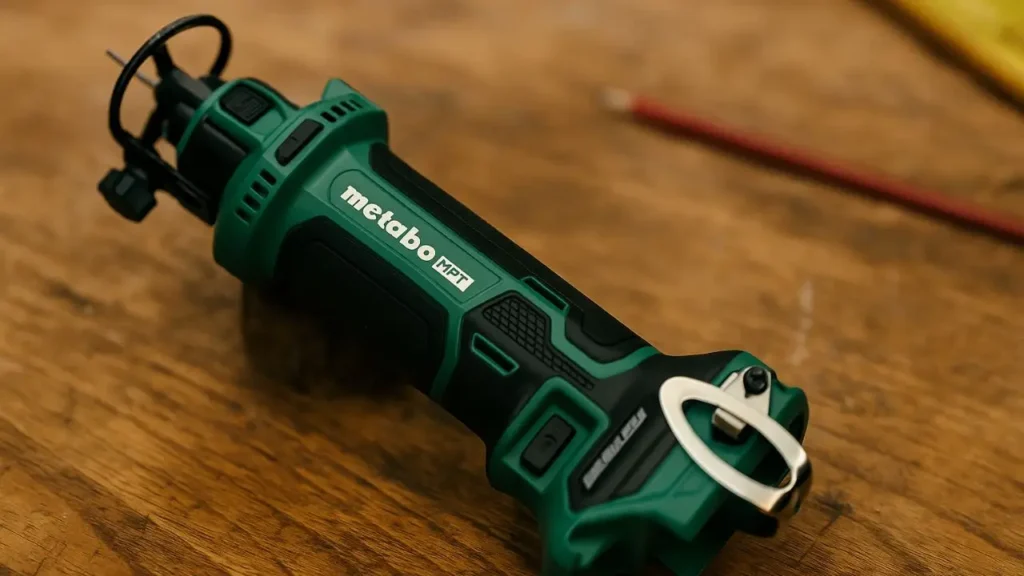
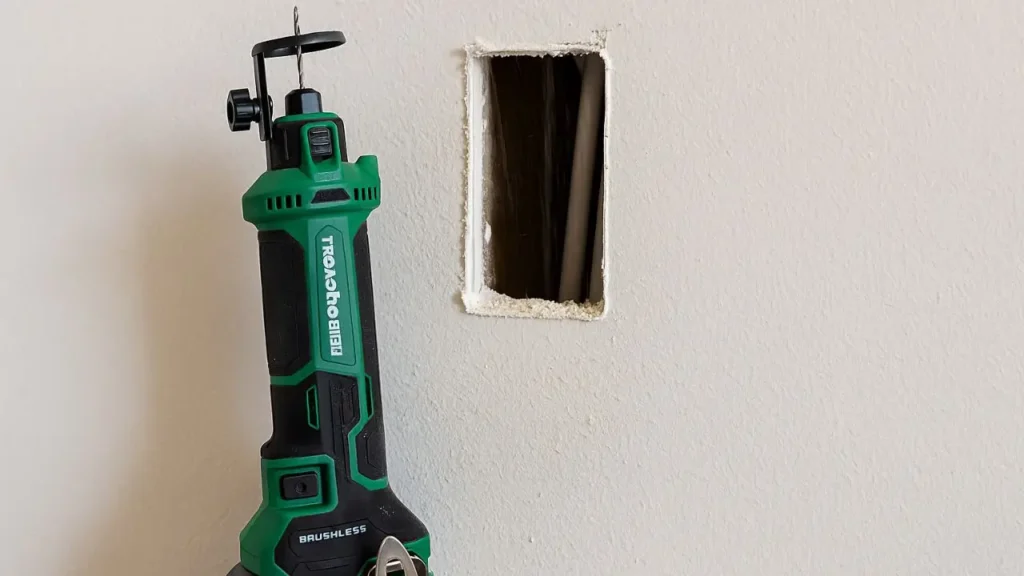
The Metabo HPT Drywall Cut Out Tool weighs 1.6 pounds. It’s more than a pound and a half lighter compared to DeWalt’s DCS551. As someone who’s spent years using all kinds of tools on the job, I felt that weight difference right away the moment I held it.
When you look for the best drywall cut out tool, both power and how well it works are just as important as how easy it is to use. The Metabo HPT M18DYAQ4 stands out with its brushless motor that has an impressive ability to reach bit speeds of up to 28,000 RPM. On top of that, this tool allows users to cut around 100 feet of 1/2-inch drywall on just one 2.0Ah battery charge. This equals cutting enough drywall to handle about 120 outlet boxes in one go.
The Metabo HPT stands out in size and weight when stacked against other brands. It comes in at 3 lb 14 oz making it both shorter and lighter than Milwaukee’s 4 lb 2 oz tool. But with a $119 price tag for the bare tool, the big question is whether it’s worth the cost. As the newest member of the MultiVolt lineup, I decided to test this drywall cut out tool and see if it earns a place in your toolbox.

- POWERFUL AND DURABLE: This cordless drywall cut out tool features a powerful brushless motor with 28,000 RPM, for a long…
- COMPACT AND LIGHTWEIGHT: Weighing only 1.6 lbs and with its compact design and low vibration, this this lightweight powe…
- USER-FRIENDLY AND SAFE: The drywall tool includes a unique soft start feature that reduces start-up recoil and enhances …
Metabo HPT M18DYAQ4 Drywall Cut Out Tool: Specs and Design
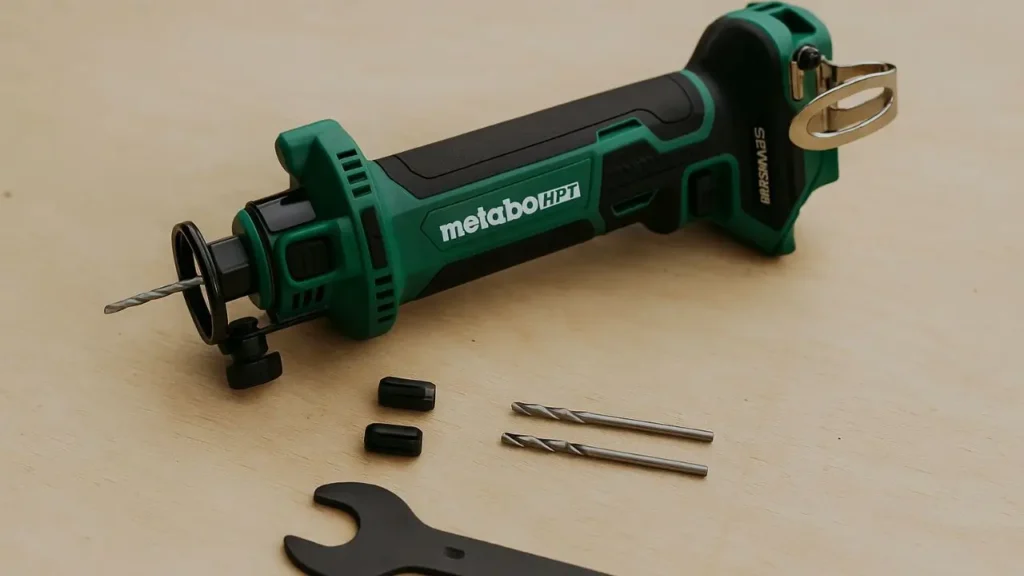
Taking a closer look at the M18DYAQ4 shows why so many professionals are talking about this tool. Most drywall tools feel heavy and awkward, but the Metabo HPT stands out with its super-thin grip. The 6-11/16 inch diameter handle feels easy to hold and makes long drywall jobs less tiring.
Motor: 28,000 RPM Brushless Power
This cut-out tool uses a strong brushless motor running at 28,000 RPM. The high speed improves how long the tool lasts when compared to brushed motors. The brushless design also keeps power steady no matter how much the battery drains allowing clean cuts from start to finish.
Works with 1/8-inch and 1/4-inch Collet Sizes
The Metabo HPT drywall cut-out tool stands out because it works with interchangeable collets. It includes both 1/8-inch and 1/4-inch collets making it easy to adjust to various bit sizes based on the task at hand. This feature proves useful when moving from regular drywall cutting to smaller more detailed jobs.
Weight and Dimensions: Lightweight at 1.6 lbs
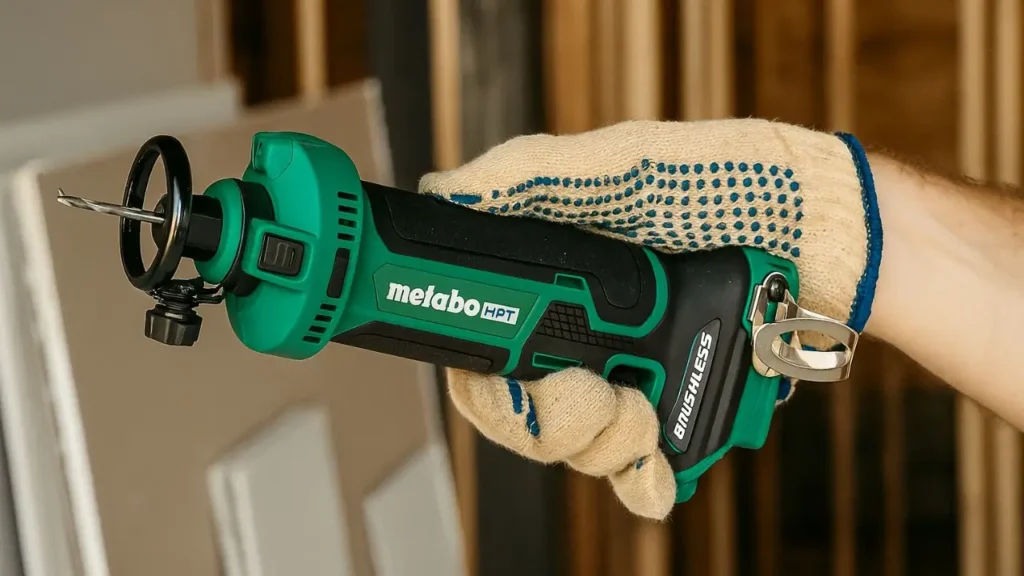
The tool stays easy to carry because of its built small frame. It weighs just 1.6 pounds when you take out the battery. This makes it much lighter compared to many other options. Its total length is 8-3/4 inches, which gives it a great mix of control and steadiness. Even though it is light, the tool keeps vibration low. This helps users avoid getting too tired when working on long tasks.
Soft Start and Blade Brake Features
The M18DYAQ4 stands out from simpler cut-out tools because of its safety features. A soft start lowers recoil when powered on to stop sudden jerks that might cause rough cuts or strain on the user. It also has a blade brake that kicks in as soon as you turn off the switch. This helps users stay in control and avoid mishaps with materials or injuries. These functions combine to improve both safety and accuracy while using the tool.
This tool also offers useful extras, like an LED light to brighten dim workspaces and a belt hook to make it easier to store when not in use.
How It Performs and Lasts in Everyday Tasks
I used the Metabo HPT Drywall Cut Out Tool across a bunch of jobsites for several weeks. This gave me plenty of insight into how it performs in real-world situations rather than just relying on the spec sheet.
Battery Life: Cuts About 100 Feet with a 2.0Ah Battery
This tool’s battery life surprised me in a good way. It works with a 2.0Ah battery and manages around 100 feet of cutting in drywall that’s 1/2-inch thick. To give you an idea, that’s close to 120 outlet boxes worth of cuts. During testing on a commercial renovation site, I found this to hold up. I got through a whole floor of electrical box cutouts without having to stop and switch batteries.
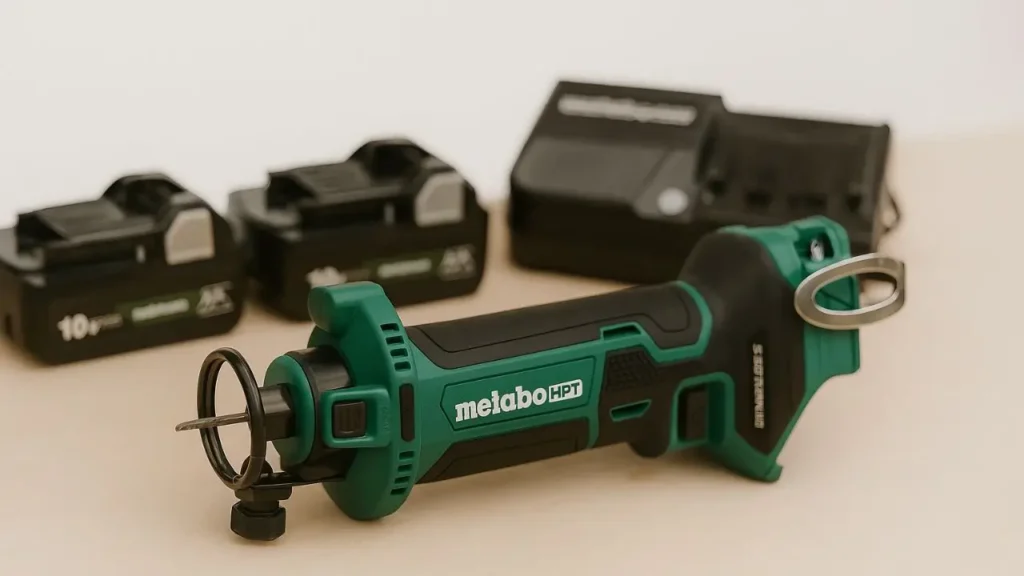
The MultiVolt battery system delivers great adaptability. You can use the regular 18V batteries if you want to keep the tool lighter or go with the MultiVolt battery that operates on both 18V and 36V tools. This setup almost doubles the runtime to reach up to 8.0Ah per charge making it a game-changer on bigger jobs where frequent battery changes would just slow you down.
LED Light and Belt Hook: Handy Features for the Jobsite
The built-in LED light lights up dim workspaces well. I found it helpful when cutting outlet spaces in closets or other dark areas. It removes the hassle of needing a separate work light making the tools you carry more efficient and manageable.
The integrated belt hook[82] stood out among the handy features. This simple little hook made work much easier. Instead of bending down or reaching for the tool, I clipped it to my belt in between cuts. For those who make dozens of cuts every day, this feature makes a big difference by saving time and effort.
Quick Adjustments Without Tools: Changing Bits Made Easy
The system for adjusting the base without tools[82] improved the overall experience. Unlike other models that need extra tools, I adjusted the cutting depth and swapped bits without searching for an allen wrench. This was helpful when switching between different drywall thicknesses or moving from regular outlets to more specific ones.
Switching bits is straightforward, and this works well with the dual collet system giving the Metabo HPT Drywall Cut Out Tool a lot of flexibility to handle different cutting tasks.
Metabo HPT vs DeWalt, Makita, and Hilti: A Comparison
Looking at drywall cut out tools across top brands, some key differences stand out. Here’s a closer look at how the Metabo HPT measures up next to its rivals.
Metabo HPT M18DYAQ4
DeWalt DCS551B
Makita XOC02Z
Milwaukee 2627-20
Weight and Size Comparison
The Metabo HPT is lighter than other pro drywall cut out tools. Without the battery, it weighs 1.6 pounds. This makes it far lighter than DeWalt’s DCS551, which is 3.1 pounds, and more compact than Makita’s XOC02 that weighs 3.7 pounds with its battery attached. Even next to Milwaukee’s 2627 model at 1.8 pounds, the Metabo HPT holds onto a weight edge.
This tool’s compact build and 8-3/4 inch length help when working on ceilings or during long projects. While testing it, I could feel less strain on my arms compared to when I used bulkier models. That made handling large drywall tasks a lot easier and faster.
Speed and Features Comparison
The Metabo HPT runs with a brushless motor at 28,000 RPM putting its speed right in the middle. Makita takes the top spot with 32,000 RPM, while DeWalt lags behind at 26,000 RPM. Milwaukee clocks in at the same 28,000 RPM as the Metabo HPT.
When it comes to price, Metabo HPT stands out at $119 for the bare tool. It costs less than Milwaukee priced at $149, and is a lot cheaper than Makita, which sits at $229. DeWalt comes close to Metabo HPT with a $129 price tag.
Looking at features, all four tools work with both 1/8-inch and 1/4-inch collets. However, Metabo HPT sets itself apart. It includes a soft-start feature and a tool-free base adjustment system, which are not found in all of its rivals.
Drywall Cutout Tool vs Router: Which One Should You Choose?
Some argue whether it’s better to use a drywall cutout tool or a router for cutting drywall. Based on what I’ve seen, routers can cut drywall if needed, but they aren’t made for that kind of work.
A contractor explained that routers are “heavy and a bit to deal with” when cutting drywall. Drywall dust described as “abrasive,” can also harm router motors not made for this kind of job.
Specialized tools, like the Metabo HPT, rely on 1/8-inch helical bits that “guide the cut by riding on whatever you’re cutting out.” This design offers accuracy that standard routers can’t easily match. While a router with a 1/8-inch collet might look like a flexible option, its weight makes having a tool dedicated to drywall work a better choice for anyone doing a lot of it.
Price and Value: Is $199 a Fair Price?
To invest in a good drywall cutout tool, you need to think about not just the cost at the start but also how valuable it will be over time. Let’s see if the Metabo HPT lives up to its price.
Price of the Tool and Battery Needs
Some listings show the Metabo HPT M18DYAQ4 priced at $199, but the actual bare-tool cost is $119. This makes it a strong competitor in its category. However, buyers need to add battery expenses unless they already own Metabo HPT gear. The tool works with any 18V battery or the dual-use 18V/36V MultiVolt batteries. To get the longest runtime, you can use the MultiVolt option, which delivers up to 8.0Ah, but it comes with extra costs.
Warranty Details: Sorting Out the 1-Year and Lifetime Mix-Up
Metabo HPT claims to provide a “lifetime lithium ion tool body” warranty, but their fine print shows a few details to keep in mind. Their warranty defines “lifetime” as “the serviceable life of the product.” At the same time, some Metabo HPT tools come with other warranty options that range between 1 to 5 years of limited coverage. This means the drywall cut-out tool gets lifetime protection for the tool body, although the batteries follow their own warranty rules.
Best Uses: Pro Builders or DIY Remodelers?
Drywall experts using this tool for regular jobs get great value due to its solid performance and fair price. It can cut about 100 feet of drywall with just one 2.0Ah battery charge making it a smart choice to handle big projects on a budget.
On the other hand, things may feel a bit different to homeowners or occasional DIY enthusiasts. Professionals in the field say, “cut-out tools made for drywall help to make quick work of electrical rough-ins and detail cutting; however, they can be one-trick ponies.” For DIY projects, a more flexible oscillating multi-tool, which many might already own, could achieve similar results while also tackling tasks beyond drywall.
Lightweight Winner That Delivers Great Value
I put the Metabo HPT Drywall Cut Out Tool to the test on different jobsites, and here’s what I think—it’s a tool every pro should consider adding to their kit. With a weight of just 1.6 pounds, it feels easier to handle during long workdays compared to bulkier options like those from DeWalt or Makita.
The brushless motor runs at 28,000 RPM. The battery lasts up to 100 feet of cutting per charge, which was enough to cover most of my tasks in a day. Because of this, I kept turning to it while working on recent commercial renovation projects.
Thinking about price is always important when buying tools. While some ads say $199, the real price of $119 for the bare tool makes it stack up well next to Milwaukee at $149 and DeWalt at $129. Professional drywallers will get their money back fast because this tool saves time and lowers strain.
DIYers should stop and think about how much they’ll use it. If you’re just doing an occasional remodel, an oscillating multi-tool might work fine for small drywall tasks. But for anyone dealing with large drywall jobs, this tool’s speed and accuracy will stand out.
Useful touches like the dual collet system, easy tool-free adjustments, and soft start make the tool handier overall. Plus, the built-in LED light ended up being more helpful than expected during work in lit areas.
The Metabo HPT drywall cut out tool proves to be a great choice among specialized tools that earn their price with top-notch performance. So, if you handle drywall often, you should think about using this tool. It is strong but light making it easier on your wrists and arms after a long day of work.